

Germany’s Smart Manufacturing Blueprint: Industrial IoT Streamlining Success
Let’s start with a direct challenge: If you’re responsible for any aspect of manufacturing operations in 2025—whether on the floor or in the C-suite—you’ve probably felt some degree of “digital overwhelm.” The buzz around smart factories, industrial IoT (IIoT), and Germany’s Industrie 4.0 is relentless. I felt it keenly back in 2019, during a benchmarking tour in Munich—where small manufacturing plants somehow ran with seamless, data-driven precision while we were still stuck wrangling spreadsheets. It’s more than hype. Germany’s streamlined IIoT playbook really works. But the question is, how?1
In my experience consulting for mid-size manufacturers across Europe and North America, those coveted German results—quick changeovers, real-time diagnostics, predictive maintenance—aren’t magic. They’re the product of thoughtful, incremental learning and cultural commitment, combined with smart tech choices and plenty of lessons learned the hard way. Today, I’ll outline what’s worked for German industry, share mistakes I’ve observed (and made), and distill the authentic blueprint for streamlining manufacturing operations using industrial IoT solutions. If you’re an operations manager, CTO, or plant engineer looking for actionable insights, this guide is your ticket. Let’s do this.
What Makes Germany Different?
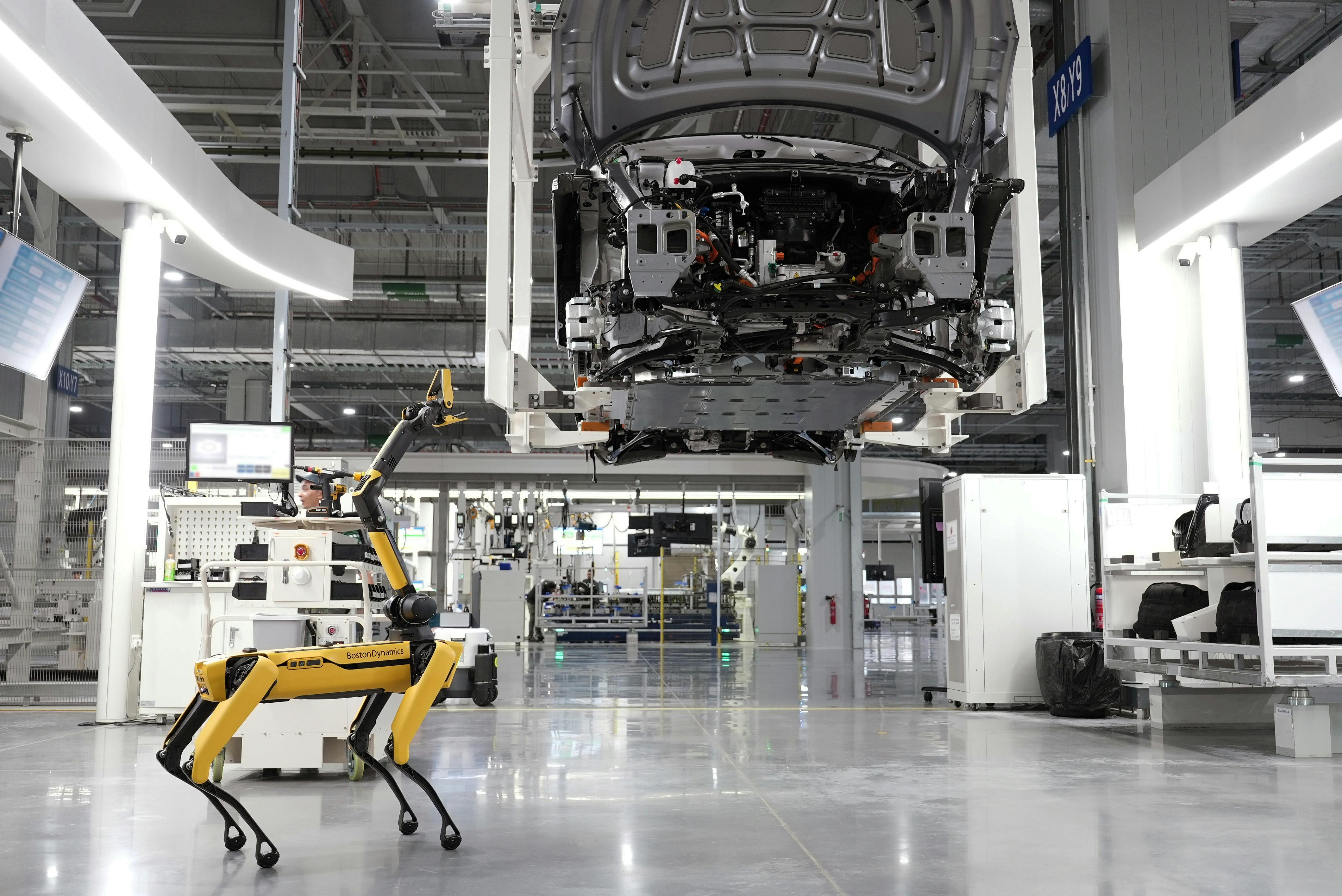
Stop for a second and imagine a factory floor in Bavaria. Not the shiny showcase sites, but an ordinary mid-size plant. There, CNC machines are feeding data back to a MES (Manufacturing Execution System) that’s tuned for energy efficiency. Machine operators get real-time feedback on performance and maintenance schedules through digital dashboards. Supervisors monitor supply chain disruptions before they hit, thanks to connected logistics modules. What strikes me most—even as a foreigner observing—was how ordinary digital integration seemed.2
You’ve probably read vague references to Germany’s “engineering culture.” In truth, it’s part culture and part systemic discipline: German manufacturers embrace methodical process improvement, rigorous regulatory compliance (think: DIN, VDE), and cross-functional collaboration as second nature. The journey to smart operations isn’t “one big leap”—it’s a constant, incremental commitment to getting better, day in, day out.4
I used to think that successful smart factories were all about budgets and the latest technology. Actually, the biggest differentiator is strategy and intent. If you want German outcomes, you need both the right technology and the right approach to change management.5
Building Smart Factories: Foundations & Mindsets
I’ll be upfront: The first time I tried to copy German smart factory practices for a North American client, we started with technology first—a web of sensors, cloud dashboards, the works. Guess what? Operational chaos. We learned that technology is only half the blueprint. What really matters is how you prepare your people and processes to adapt, experiment, and learn from mistakes.6
- Start with clearly defined process maps and metrics.
- Engage cross-functional teams early—operators, engineers, IT.
- Iterate: Pilot changes on one line before scaling up.
- Invest in ongoing workforce training—not just initial rollouts.
As someone who’s fumbled through more than a few implementations, I’ll say this: Germany’s secret sauce is a relentless focus on asking, “What can we improve next?”—not, “Which new gadget will solve everything?” That mindshift changes the game. Moving on…
Key IIoT Technologies Defining Success
Here’s what gets me when I compare site visits across Europe. German factories rarely chase the latest fads—instead, you see disciplined adoption of practical, scalable IIoT technologies. Let that sink in for a second. While flashy tech demos grab headlines, German plants typically standardize on proven “building blocks”: networked sensors, MES integration, edge computing, cloud analytics, and secure connectivity.8
| Technologie | Role in Operations | German Adoption Notes | Future Potential |
|---|---|---|---|
| Networked Sensors | Real-time machine data, predictive maintenance | Standardized; focus on reliability over novelty | Advanced diagnostics, AI-based scheduling |
| MES (Manufacturing Execution Systems) | Production tracking, KPI reporting, process control | Highly integrated with legacy systems | Adaptive workflows, self-optimizing plants |
| Edge Computing | Local analytics, reduced latency, factory autonomy | Often paired with cloud for hybrid models | Autonomous decision-making, real-time optimization |
| Cloud Analytics | Centralized data, trend analysis, remote monitoring | Strict data governance, EU compliance | Global benchmarking, multisite management |
| Secure Connectivity | Protects OT/IT assets, enables safe integration | DIN/VDE/NIST aligned systems | Zero-trust, adaptive security |
I’ve consistently found that it’s tempting to leapfrog to complex AI or digital twins—yet real ROI comes from getting the basics right. For example, predictive maintenance using IIoT sensors has cut downtime by 30% at some German sites—a benefit that’s tangible, measurable, and repeatable.9
Streamlining Operations: The Practical Blueprint
So let’s get properly practical—what’s the step-by-step path German manufacturers use to streamline with IIoT?
- Map Your Processes. Identify bottlenecks and inefficiencies before digitizing. This is where most non-German plants get stuck—we rush into tech, missing foundational process clarity.10
- Pilot IIoT Solutions in One Area. Germans rarely “go big” initially. Instead, they pilot sensor monitoring on a single CNC line and measure results for 3-6 months.11
- Institutionalize Feedback Loops. Use real-time data to decide the *next* improvement—often via collaborative workshops.
- Integrate IT and OT Security. Never bolt IIoT onto legacy systems without a robust security plan. German plants coordinate with IT up front—and compliance teams.12
- Scale Up with Workforce Buy-In. Engage your frontline teams in every upgrade. I’ve lost count of the times implementation failed due to lack of operator input.13
Sound familiar? It’s way harder in practice than it sounds. The long-term winners are those who stick with measurable, modest changes and refuse to chase big, expensive leaps until their house is truly in order.
German Case Studies & Lessons Learned
Last year, I joined a client visit to a family-owned automotive supplier in Stuttgart—classic “Hidden Champion” territory. They had piloted IIoT-enabled predictive maintenance on a single press line. Within 8 months, unplanned downtime had dropped by 38% and scrap rates fell by 12%. Crucially, this wasn’t some VC-funded startup—it was a business founded in 1967 that evolved by layering IIoT onto decades-old assets while incrementally retraining operators.14
“In Germany, we treat digital transformation as a marathon, not a sprint. Every improvement must prove its value—first in the pilot stage, then in scale.”
This attitude—experiment, measure, review, iterate—is fundamentally German, but it’s universally applicable. I used to make the mistake of pushing clients to scale too quickly; these days, I recommend the marathon mindset.15
Another example: A mid-sized packaging plant in Saxony introduced IIoT-based energy monitoring. The project started with cardboard converting—installed sensors, ran pilots, and then expanded plantwide. Within a year, energy costs were down 17%, qualifying them for new “green manufacturing” grants from the Ministry for Economic Affairs.16
Did they get everything right? No. Actually, some of their earliest pilots failed due to unclear data governance and lack of IT/OT communication. That’s valuable in itself—learn what not to do.
Challenges, Opportunities & What’s Next
Let me step back for a moment—there’s a pervasive myth that Germany’s IIoT journey has been flawless. Actually, the reality is far messier. Having spent time with process engineers in both Frankfurt and Augsburg, I’ve seen plenty of resistance to change, personnel gaps, and even regulatory headaches. If you’re preparing for your own digital transformation, here’s what you should watch for:
- Ongoing struggle with legacy systems and integration costs
- Data security and privacy requirements under GDPR and DIN standards17
- Workforce skepticism and skill gaps despite government retraining initiatives
- Pressure from global competition for ever-faster cycle times and lower costs18
What really struck me in last year’s German conferences was how much discussion focused on building resilience, not just speed. The long-term opportunity is becoming more adaptive, not just more efficient.19
Future-Proofing Your Own Operations
Okay, let’s step back. If you want to future-proof operations using German lessons, you need to go beyond “tech first” thinking. In 2023, several German automotive plants began experimenting with AI-powered predictive scheduling—but only after two years of granular, sensor-driven process improvements.20 They’d already built a mindshift around constant change before adding advanced analytics. This is the tactical pattern I see over and over again:
- Focus initial IIoT rollout on reliability, energy, and maintenance (not productivity alone).
- Use data to create “digital twins” of limited scope—improving one process at a time.
- Don’t rush AI or automation at scale; build on incremental confidence and trust.
- Leverage government and industry grants to fund upskilling—Germany’s KfW and Fraunhofer do this well.21
If you’re unsure how to adapt these strategies, ask yourself: “Which process could give us the biggest reliability boost with the least disruption?” Then, pilot with authentic operator engagement. I have to say, some clients still resist pilot projects—and frankly, that slows progress more than any tech challenge.
“Innovation in manufacturing comes down to disciplined iteration. The goal isn’t perfection—it’s measurable, repeatable improvement.”
Looking ahead, German regulators are tightening standards for energy and process transparency—a reality you’ll want to watch if you’re in the EU or supplying European customers. Sustainability will shape every IIoT investment in the coming years.22
Actually, what I should have mentioned earlier—global companies exporting into the EU must align with German digital standards for traceability, proving how their products are made, tracked, and maintained via IIoT. If you’re not monitoring this, you risk compliance penalties and losing competitive edge.
Conclusion: Germany’s IIoT Blueprint in Action
If you’re still with me—thank you. I’ll be completely honest: The more I study Germany’s smart manufacturing evolution, the more I appreciate their mastery of incremental, measurable change, backed by rigorous process discipline and workforce engagement. It’s never about having the shiniest tech stack. Instead, the focus is on doing a little better every day, leveraging IIoT smartly, and treating every failed experiment as a goldmine of learning.24
What excites me most is the sustainability angle—German plants set the global benchmark for energy-aware operations and transparent supply chains thanks to IIoT adoption that is both pragmatic and ambitious. The future is about adapting efficiently to change, not just speeding up production lines. Sound counterintuitive? It’s what sets their model apart.
Action Steps & Evergreen Principles
- Audit all current processes and bottlenecks before any digital upgrade.
- Design and run IIoT pilots in limited areas—don’t try to “go big” out of the gate.
- Institutionalize collaborative, data-driven feedback loops.
- Invest in workforce upskilling—not just operator training, but process innovation mindsets.
- Monitor and adapt regulatory/compliance standards in real time.
- Pursue grants and funding for IIoT pilots and energy initiatives.
From my perspective, these evergreen steps enable you to update, expand, or repurpose content and strategy as the industry evolves. Whether you extract key tables for a staff infographic or present these principles at your next executive strategy session, you’ll keep real-world value front and center.
Références




 French
  English
  Spanish
  Chinese
  Arabic
  German